


































UK Fireworks Laws
Have Fun, Keep Safe, Stay Legal
We want you to have a safe, enjoyable and legal fireworks party. If you’re unsure about the law around fireworks, scroll down and find out about age restrictions on purchase, date and time restrictions on setting them off, and what you can and can’t do with different firework category products.
The law could be changing soon, according to the government's 2026 fireworks proposal, so getting up to speed on how you can use fireworks now is the best way to plan a superb party.
When Can You Use Fireworks? Curfew Information
You can set off fireworks between 7am–11pm in England and Wales. For Bonfire Night, the time extends to midnight, and for New Year's Eve, Diwali, and Chinese New Year, it extends to 1am.
There are exceptions to the timing restrictions for special occasions. For Bonfire Night, fireworks can be used until midnight. For New Year's Eve, Diwali, and Chinese New Year, the time extends to 1am. These exceptions allow for the celebration of these important cultural events with the beauty and excitement of fireworks.
Scotland normally permits fireworks between 6pm and 11pm.
The Legal Age for Purchasing Fireworks in the UK
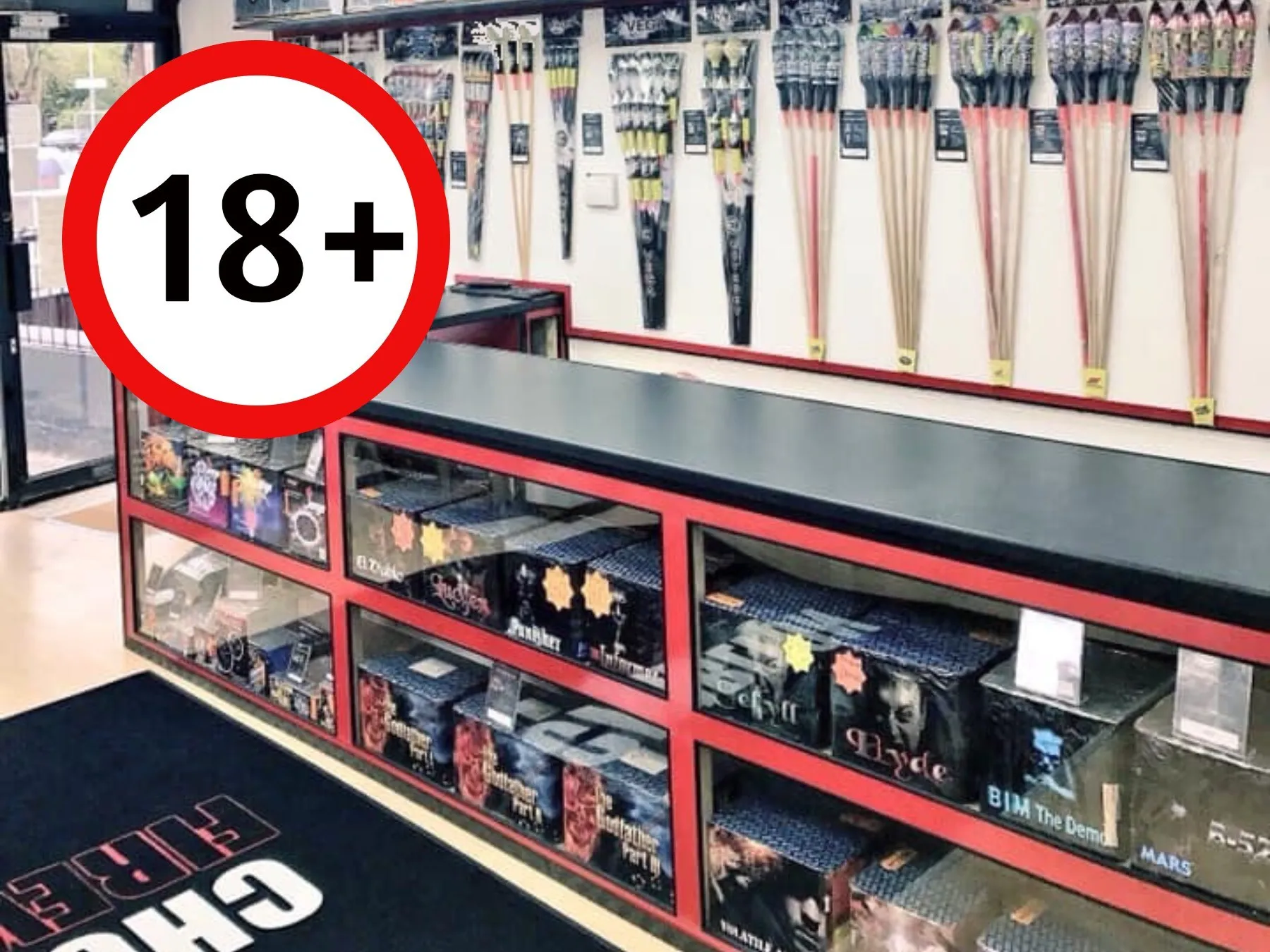
The minimum purchase ages are 18 for F2/F3, 16 for most F1 products, and 12 for Christmas crackers.
Why 18 is the Legal Age
The legal age for buying most fireworks is set at 18 because fireworks can be dangerous if handled irresponsibly. 18 is the age at which someone is considered an adult and mature enough to use fireworks safely. Setting the age limit helps prevent fireworks from getting into the hands of minors who may misuse them.
Types of Fireworks and Age Restrictions
All consumer fireworks like fountains, rockets, Roman candles, Catherine wheels, or aerial display shells have the same 18+ age limit. Sparklers are also restricted to 18+.

Penalties for Underage Purchase
There are legal consequences if you are caught trying to buy fireworks when underage. The penalties can include:
Being issued an on-the-spot fine of £90, which must be paid within 21 days.
Receiving a formal caution from the police that goes on your permanent record.
Potential criminal prosecution for more serious or repeat offences. This can result in a large fine or even imprisonment.
The penalties aim to deter underage purchase or possession of fireworks. The consequences escalate based on the circumstances, but underage buyers face repercussions like fines or criminal prosecution.
There are four firework categories in the UK: Category 1 (indoor), Category 2 (garden), and Category 3 (garden), and Category 4 (display). Category 1 fireworks are for use in extremely restricted areas. Category 2 fireworks must be safely viewable from at least 8 metres away and often further. Category 3 fireworks must be safely viewable from 25 metres away. These rules do vary, so always check the packaging. Fireworks that are louder than 120 dB (A, imp) at the relevant safety distance, or an appropriate equivalent measurement, cannot be sold to the public.
Category 1 Fireworks
Category 1 fireworks, also known asindoor or novelty fireworks, are designed for use in extremely restricted areas. These fireworks are generally low hazard and intended for use in confined spaces, including indoors. They must meet the requirements of the Pyrotechnic Articles (Safety) Regulations 2015. Sparklers can be F1 or F2; check the packaging.
Category 2 Fireworks
Category 2 fireworks, often referred to as garden fireworks, are designed for outdoor use in relatively small areas. These fireworks must be safely viewable from eight metres away. They provide a safe and enjoyable firework experience for smaller outdoor gatherings.
Fountains, strobes, and Catherine wheels are fireworks often made for Category 2.
Category 3 Fireworks
Category 3 fireworks, or "display" fireworks, are designed for larger open spaces. These fireworks must be safely viewable from 25 metres away, and must scatter no debris beyond a 20-metre range. They are typically used in larger public displays and offer a more intense and spectacular experience.
Rockets, mines, and barrages are popular fireworks in Category 3.
Category 4 Fireworks
Category 4 fireworks, known as "professional" fireworks, are the most powerful category and are for sale only to fireworks professionals. Due to their power and potential for harm, these fireworks should only be used by trained professionals in controlled environments.

How to Buy and Use Fireworks Legally
Regulations on Storage
In Great Britain, whether you need a licence to store fireworks depends on their hazard type, net explosive content and how long you keep them. Some limited quantities and short-term storage arrangements are exempt. Where a licence is required, your local licensing authority generally handles quantities up to 2,000kg net explosive content, subject to the site meeting the relevant requirements. Larger quantities normally require a licence from the Health and Safety Executive.
The specific licensing authority depends on the location and the amount of fireworks to be stored. For instance, in West Midlands, Merseyside, Greater Manchester, Tyne and Wear, South Yorkshire, and West Yorkshire, the fire service is responsible for licensing. In other areas, the local council's trading standards department is the authority. In Northern Ireland, registration with the Department of Justice is necessary. Consumers normally need a licence to buy, possess and use fireworks, with exemptions for indoor fireworks and sparklers. You may also want to consider a plan for responsibly disposing of fireworks, especially those that failed to go off.
The sale of fireworks is also regulated, with specific times of the year when fireworks can be sold without an additional all-year sales licence. These times include from 15 October to 10 November for 5 November celebrations, from 26 December to 31 December for New Year's, the first day of Chinese New Year and the three days before it, and the first day of Diwali and the three days before it. To sell fireworks outside these times, a licence is required from either the local council or the local fire service.
Chorlton Fireworks has a licence to sell fireworks all year round, so if you have a birthday coming up or need to stock up for your business, we’ve got you covered.
Types of Banned Fireworks
In the UK, certain types of fireworks are strictly prohibited. These include bangers and fireworks known as "mortar shells". These fireworks are considered too dangerous for public use due to their explosive power and unpredictability.
They can cause serious injuries, start fires, and even result in death. Additionally, the loud noises they produce can cause distress to individuals, particularly those with sensory sensitivities and to animals. The restrictions aim to ensure public safety and minimise the potential for harm.
Fines and Penalties
In the UK, the consequences of violating firework laws are quite severe. If you're caught selling or using fireworks illegally, you could face an unlimited fine and be imprisoned for up to six months. Additionally, there's an on-the-spot fine of £90 that can be levied. These penalties are designed to deter individuals from misusing fireworks and to ensure that everyone can enjoy them safely.
Legal Consequences
The legal consequences of violating firework laws extend beyond just fines and potential jail time. For instance, if you're under 18, you're not allowed to buy fireworks, which include category 2 and 3 fireworks. It's also against the law to set off or throw fireworks (including sparklers) in the street or other public places. Violating these laws can lead to legal repercussions, including criminal charges.
350 Barlow Moor Rd
Chorlton
Manchester, M21 8AZ